
Whole-house repiping in Brandon, FL
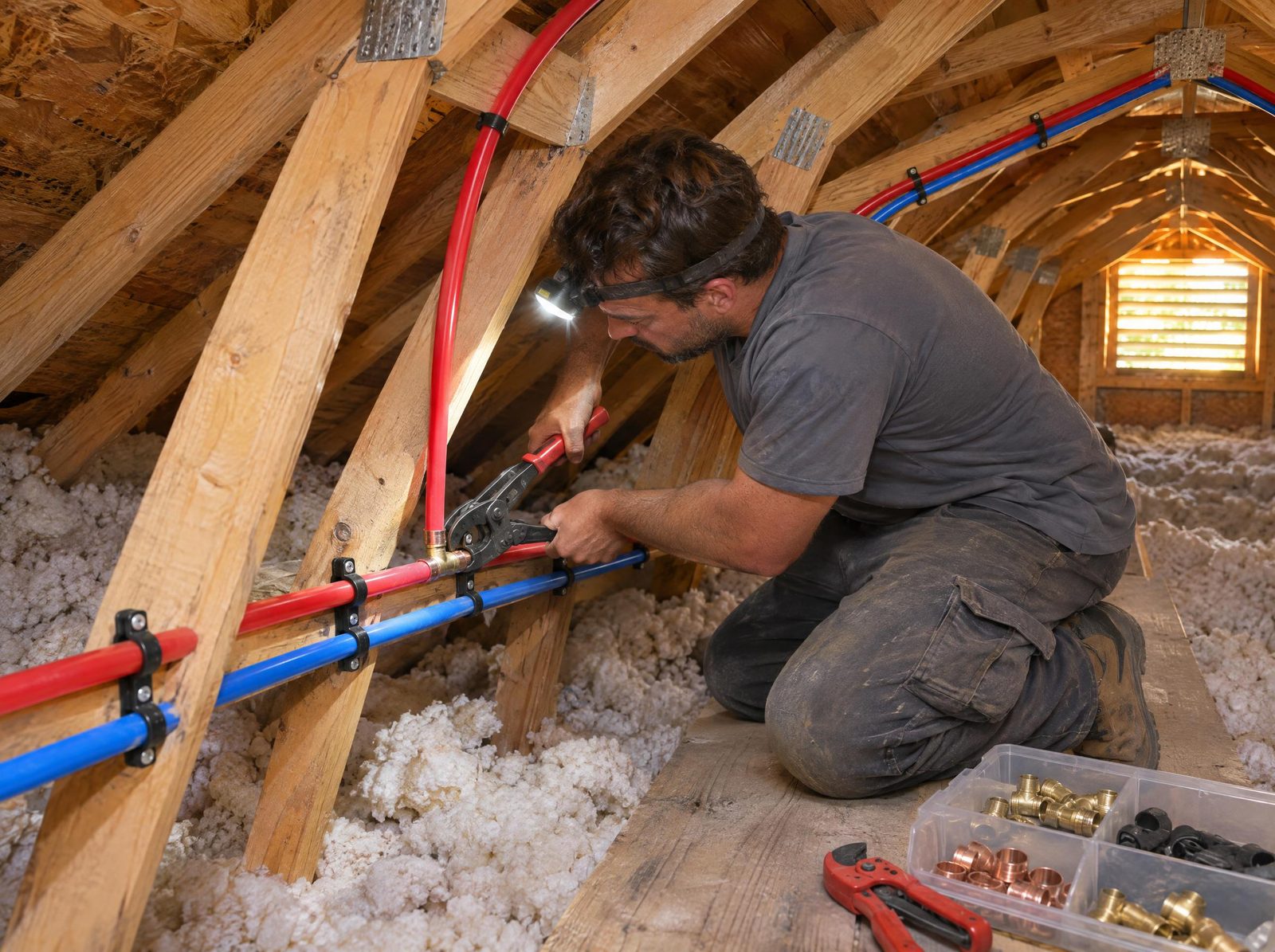
When a house has had one leak after another, or an inspector has flagged the pipe, fixing the next leak only buys time. A repipe replaces the water supply lines throughout the house. In slab houses we usually run the new lines through the attic and down the walls, so the floor stays where it is. We draw the new route for you before we start.
- New lines through the attic, not the floor
- A drawing of where every line runs
- Permit pulled, walls patched
Tell us about the leaks so far
We usually answer the same day. Tell us where you have noticed water and roughly when the house was built.
Water coming up through the floor or a pipe spraying? Shut the main off, then call or text: 813-555-0172
Why we run the new lines overhead
In a slab house the original supply lines may run in or under the floor. Replacing them in place would mean opening the slab in every room they cross. So we leave the old lines where they are, shut them off, and run new ones through the attic and down inside the walls to each fixture.
That means a few neat holes in drywall instead of a broken floor. We patch every one, and you get a drawing of where every new line runs, so the next person who works on the house knows too.
“Our 1979 house had two pinhole leaks in one year. They repiped it in PEX through the attic, pulled the city permit and patched every hole. The water pressure upstairs is a different thing now.”
Signs a house is ready for a repipe
One of these is a reason to look closer. Two or three together usually decide it.
Leak after leak
A second or third slab leak, or pinhole leaks in different rooms within a year or two.
A flagged pipe type
Gray polybutylene, or another material an inspector or insurer has asked you to replace.
Pressure that drops
Weak flow upstairs or at the far bathroom when another tap is running.
A house of a certain age
In Temple Terrace, more than half the homes were built between 1970 and 1989. In Tampa, about 44 percent date from before 1980.
Who issues the repipe permit
The permit office changes at the city line. We pull it either way.
| Where the house is | Permit office | What it says about a repipe |
|---|---|---|
| Brandon, Riverview, Valrico | Hillsborough County, through HillsGovHub | Replacing or relocating water supply piping needs a permit |
| Tampa | City of Tampa | A re-pipe inside the house is a plumbing trade permit |
| Temple Terrace | City of Temple Terrace | Any change to a plumbing system needs a permit, pulled by a licensed contractor |
| Plant City | City of Plant City Building Division | Plumbing takes its own permit |
How a repipe goes
Most of the disruption is planned for one stretch of days, and you know the plan before we start.
We map the route.
Where the main comes in, where each fixture is, and how the new lines will reach them through the attic.
We pull the permit.
From the city or the county, depending on where the house is.
We run the new lines and switch over.
Water is off for the switch, not for the whole job. Old lines are shut off and left in place.
Inspection, patches and the drawing.
The inspector signs off, we patch every hole, and you keep a drawing of the new route.
You deal with Marisol, and the route is drawn before we start

Marisol Vega, owner and state certified plumbing contractor
Marisol takes the first call, walks the line with you and writes the price before any work starts. You deal with her from the meter to the cleanup.
Book a repipe visit
We usually answer the same day. Tell us where you have noticed water and roughly when the house was built.
Water coming up through the floor or a pipe spraying? Shut the main off, then call or text: 813-555-0172
Repiping questions we hear most
How do I know it is time to repipe rather than repair?
When leaks keep coming in different places, when the same kind of pipe fails twice, or when an inspection or an insurer flags the pipe in the house. One leak under the slab is usually a repair. A third is usually a pattern. We tell you which we think it is, in writing. See slab leak repair.
PEX or copper?
Both are used for whole-house repipes. PEX is flexible, so it bends round framing with fewer joints and goes in faster through an attic. Copper is rigid and needs more joints. We price both if you want to compare and explain what each means for your walls and your schedule.
Do I have polybutylene?
Maybe, if the house is old enough and has never been repiped. Polybutylene is usually gray, flexible plastic, often joined with crimp rings at the fittings, and it can come up on an insurance four-point inspection. Send us a photo of the pipe at the water heater or under a sink and we will tell you what it is.
Does a repipe need a permit?
Yes. In Tampa, a re-pipe of the water distribution inside the house is one of the city's plumbing trade permits. In unincorporated Hillsborough County, replacing or relocating water supply piping is not a minor repair and needs a permit. Temple Terrace requires a permit for any change to a plumbing system and expects a licensed contractor to pull it. We pull it and book the inspection.
Is there lead in my water lines?
Both the City of Tampa and Hillsborough County's South-Central system report no lead service lines. Lead was banned from plumbing materials in 1986, so in an older house the question is old solder or fixtures inside, not the line from the street. A repipe replaces the supply lines inside the house.

Leak after leak? Tell us about the house.
Roughly when it was built, how many leaks so far and where. If it is a single leak you are chasing, start with slab leak repair.
Book a plumber who traces it first
We usually answer the same day. Tell us where you have noticed water and roughly when the house was built.
Water coming up through the floor or a pipe spraying? Shut the main off, then call or text: 813-555-0172